CONTENTS
Attack Chain
Info Leak → MongoDB Fingerprint → NoSQL Auth Bypass → Stored Comment Surface → Content-Type Filter Bypass → Stored XSS → Admin Cookie Exfiltration
Prerequisites: What You Need to Understand?
If these concepts aren’t clear, this challenge will feel like black magic.
- How MongoDB NoSQL authentication queries work.
- Why operators like
$ne,$gt,$regexcan bypass weak auth logic. - Difference between JSON vs XML parsers on the backend.
- How Content-Type–based filtering often leads to parser confusion.
- Stored XSS execution contexts (admin review panels).
- Cookie exfiltration via
fetch().
Challenge Overview
The application is a blog-like platform with:
- User authentication
- Articles
- Comment submission
- Admin moderation
Goal: get the flag, which is stored in admin cookies.
Phase 1: Information Disclosure (MongoDB Detection)
While enumerating endpoints, I discovered a response that strongly hinted the backend database.

The error structure and query behavior confirmed the application is using MongoDB, making NoSQL injection a viable attack path.
Phase 2: User Enumeration
From the same endpoint, I learned a valid username exists:
- user1
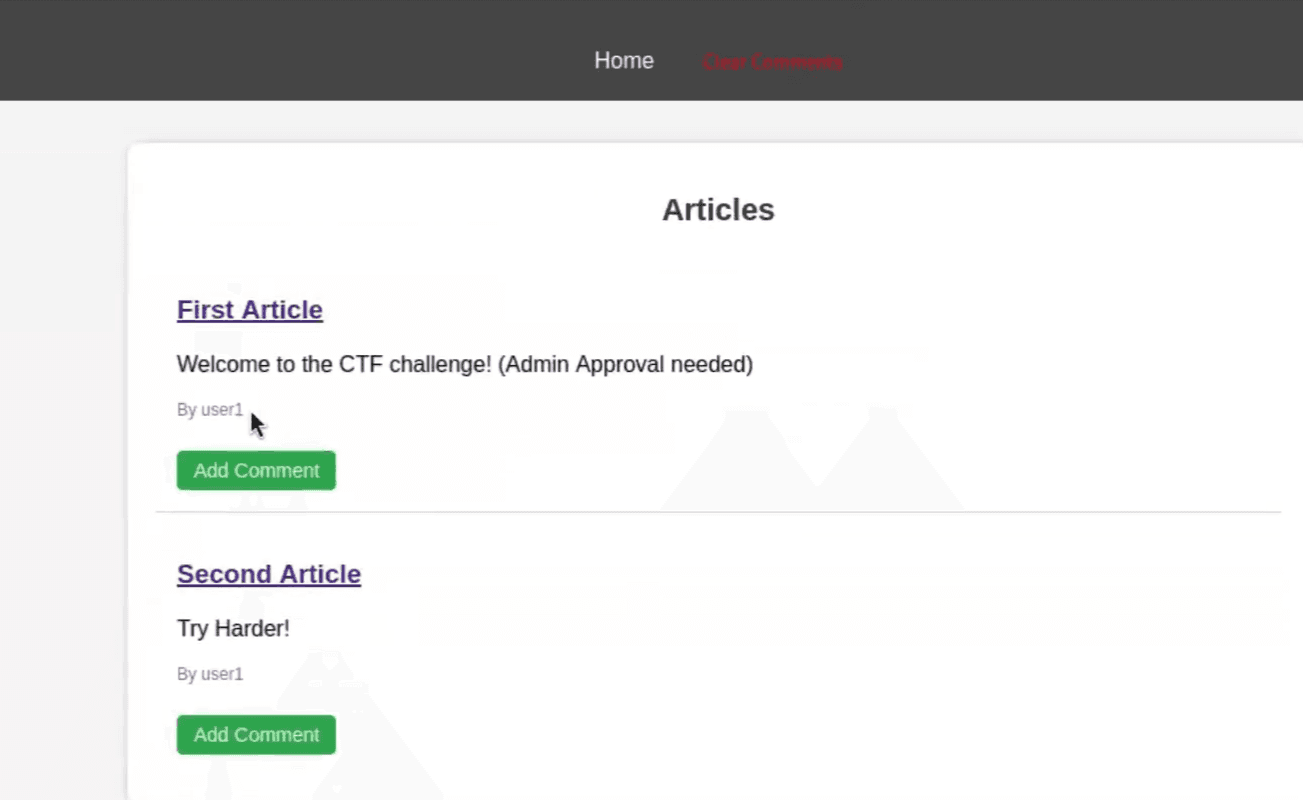
At this point, authentication becomes the next target.
Phase 3: NoSQL Injection Authentication Bypass
I navigated to the login page and submitted:
- Username:
user1 - Password: anything Then intercepted the request using Burp Suite.
Original JSON body
Modified payload (NoSQLi)
This turns the backend query into something equivalent to:
Which always evaluates to true if the password field exists.
Result:
Successfully logged in without knowing the password.
Phase 4: Comment Functionality Recon
After login, I inspected article behavior.
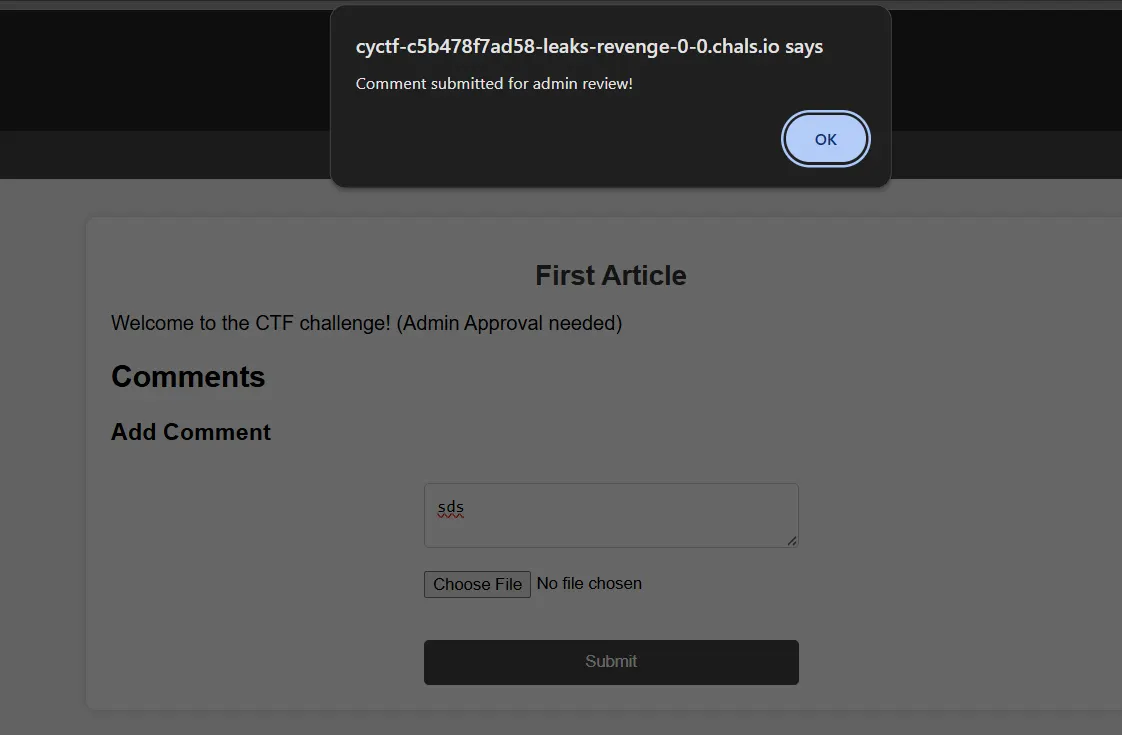
Article 1
- Comment submission result: “Comment submitted for admin review!”
This strongly suggests admin will view the page and potential stored XSS execution context.
Article 2
- Comment submission is immediately published
- No admin review required
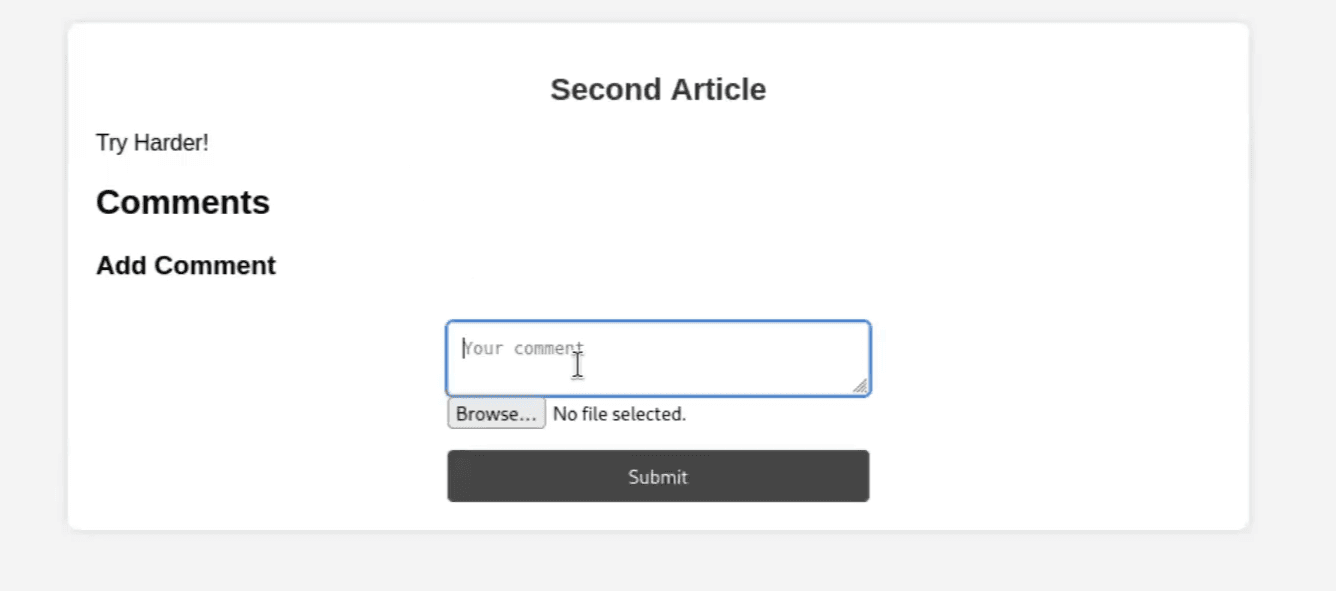
This makes Article 2 the ideal testing ground.
Phase 5: Initial XSS Attempt (Blocked)
I tried a basic payload:
Result: HTML tag not allowed
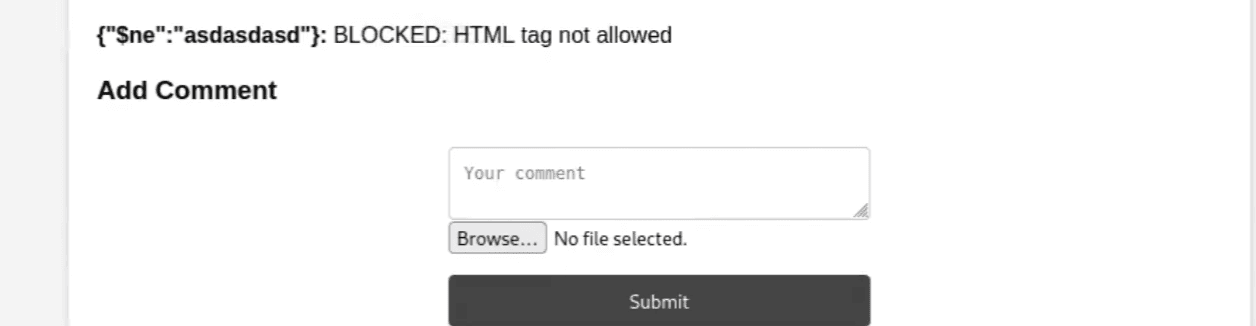
Clearly, a filter is in place.
Phase 6: Content-Type Filter Bypass
Instead of attacking the payload, I attacked the parser.
Strategy
- Intercept comment POST request
- Change Content-Type
- Switch body from JSON to XML
Modified Header:
XML Payload
Result
- Comment accepted
- Script executed
- Stored XSS achieved
The filter only existed in the JSON handling path.
Phase 7: Weaponizing XSS (Admin Cookie Exfiltration)
Now the real target: admin cookies. Since Article 1 comments are reviewed by admins, I placed the payload there.
Final Payload
Once the admin reviewed the article, the payload executed in admin context.
Phase 8: Flag Capture
Admin cookies were successfully exfiltrated to my webhook.
Why This Chain Works?
- NoSQL auth logic trusted user input
- Filters were applied only to JSON
- XML parser bypassed validation entirely
- Stored XSS executed in a high-privilege admin session
- Cookies were accessible (no HttpOnly)
Real-World Fixes
- Use strict schema validation for MongoDB queries
- Never pass raw user input directly into NoSQL queries
- Apply identical validation across all content types
- Disable XML unless explicitly required
- Set cookies with HttpOnly, Secure, SameSite
Closing
One parser, one unchecked operator, one missing cookie flag, and the admin hands you the keys.