CONTENTS
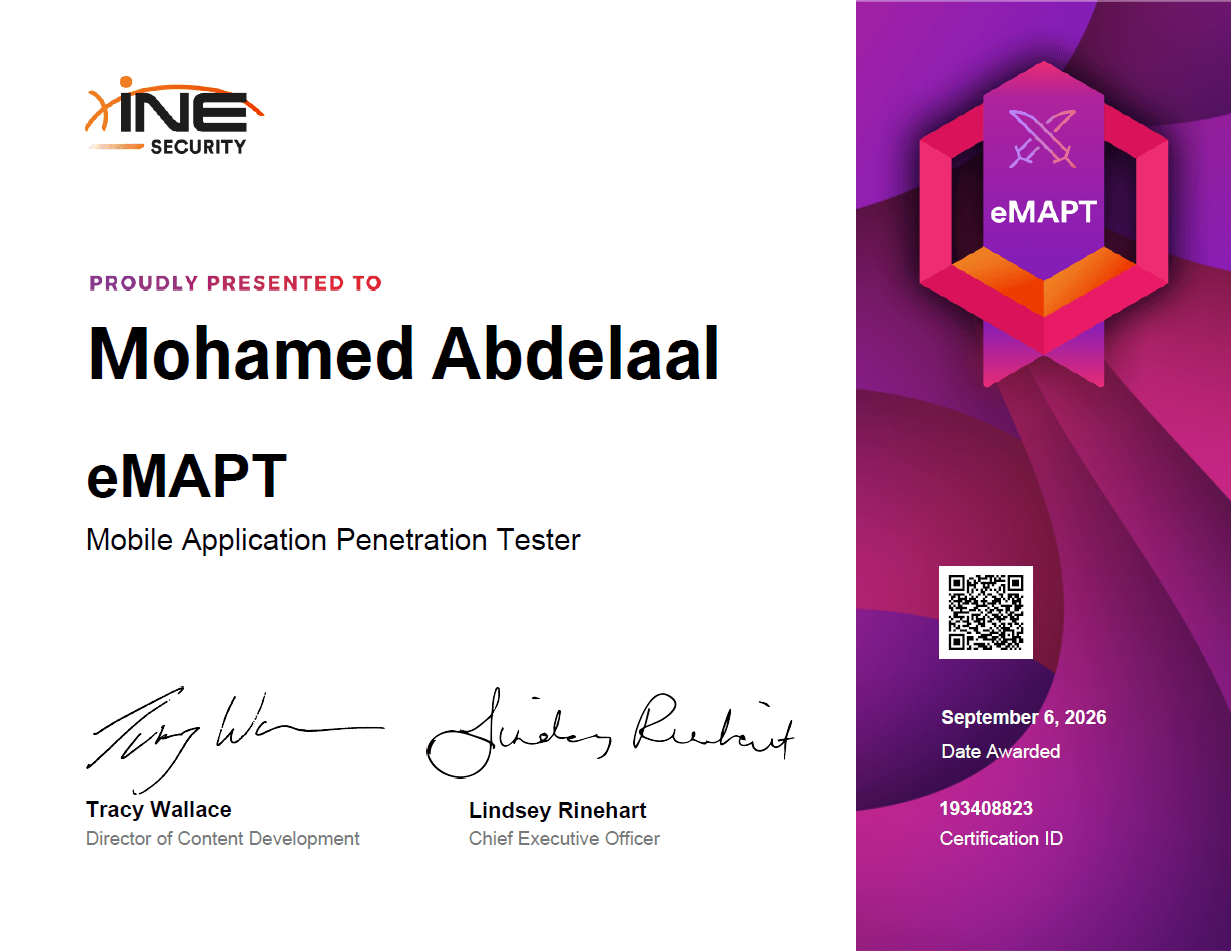
I passed eMAPT on 6 September 2026.
My take
I would put eMAPT at beginner-to-mid level, not senior level. It is a good introduction to mobile testing because it touches the app package, the device, the traffic, and the backend without expecting deep expertise in all of them.
It is also not a fully practical exam. I had theoretical questions as well, so do not prepare as if it is only a lab. You need to understand the mobile-security concepts behind the tools, not just the commands.
What it teaches well
The important part is connecting those pieces. Static analysis might show a hardcoded value or an interesting API path. Dynamic testing tells you whether it is real. Intercepting the traffic tells you how the app actually talks to the backend. If you only know one of those steps, you will miss the point.
I liked that it covers both Android and iOS, runtime protections, API testing, reverse engineering, and reporting. Mobile apps are messy in a different way from web apps: native code, WebViews, local storage, certificate pinning, device checks, and backend authorization can all affect the same feature. You need patience more than flashy tooling.
Who it suits
The certificate is worth taking if you understand basic application testing and want a structured way into mobile. It is a reasonable first mobile cert. Someone completely new to Android, proxies, and mobile runtimes will still need to spend time learning the tooling, but the material is a good place to start.
One limitation is that a lab cannot recreate every problem you find in a production mobile app. Third-party SDKs, release pipelines, device-management policies, and the risk of breaking a live app all change how you work for a real client. Passing eMAPT gives you a foundation; it does not replace that experience.
My advice
My advice: build a small Android lab, learn to read an APK before trying to bypass everything, and get comfortable following one feature from the app to the API and back. That is where the useful skill is.