CONTENTS
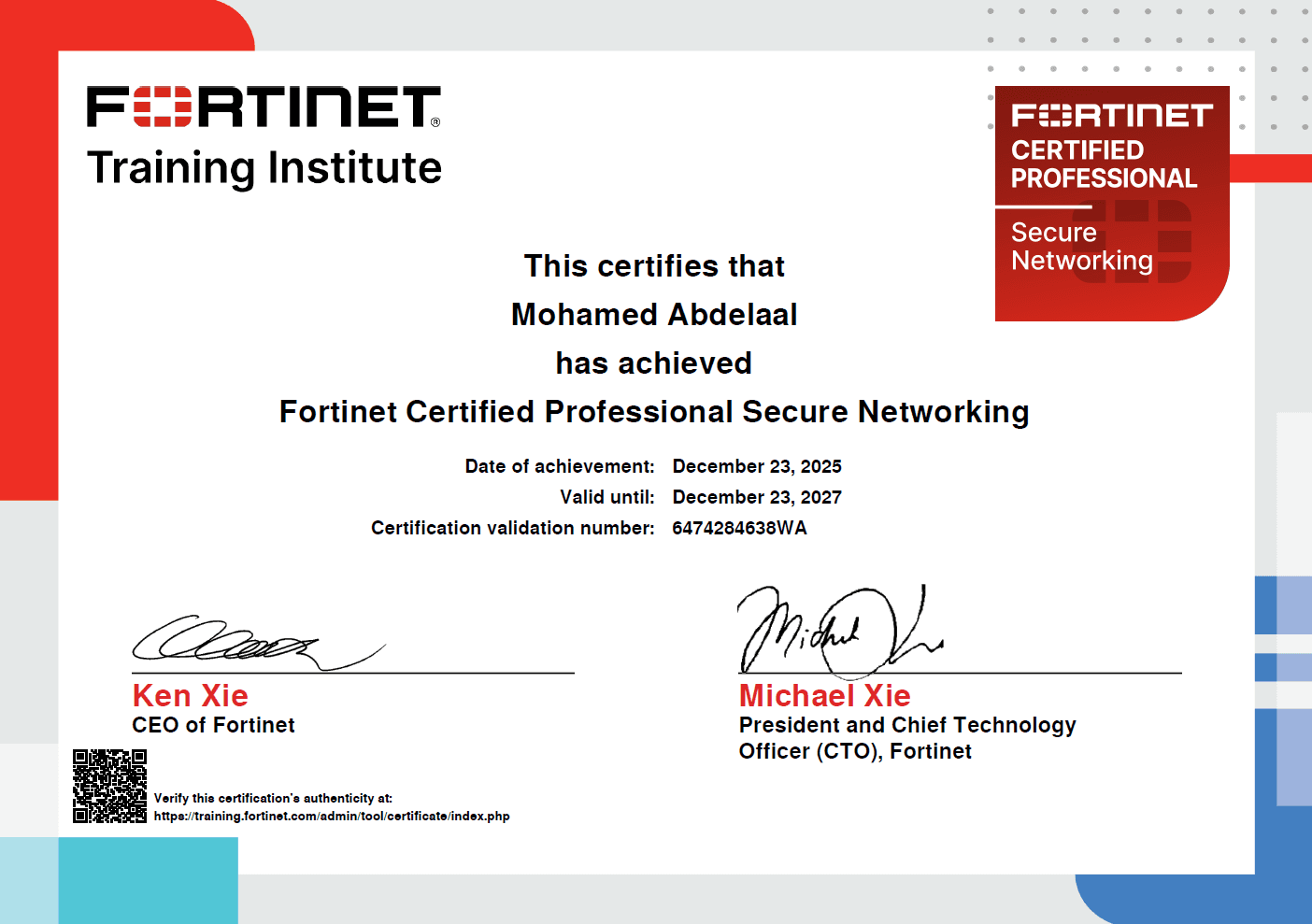
I passed NSE 4 and NSE 5 through Fortinet’s old professional path.
Before you start
One important correction for anyone finding this note now: Fortinet retired the FCP naming in 2026. The current route is NSE 4 first, then an NSE 5 track that matches the product area you actually work with. Do not study an old FCP checklist and assume it still maps cleanly to today’s exams.
What I got from NSE 4
NSE 4 was the useful part for me. It made the FortiGate flow click: policy matching, NAT, routing, inspection, logging, VPN, HA, and the usual reasons traffic does not behave as expected. The value was not learning where a setting lives in the GUI. It was being able to explain why the firewall made a decision and where to look when it did not.
NSE 5 is not one thing
NSE 5 needs to be treated as a specific product path, not one big “management” exam. FortiManager, FortiAnalyzer, switching, NAC, wireless, SASE—those are different jobs. Pick the one that matches your work. Chasing a name without a product focus is a waste of time.
I got real value from the material because I worked through the labs instead of only watching the training. The labs forced me to understand the flow, break it, and then read enough logs to fix it. That is the part worth carrying into real work.
Is it worth it?
The certificate is good evidence that you know Fortinet technology at a practical level. It is not a general networking certification and it does not make anyone a senior security engineer. Production ownership, design decisions, outages, and change control are where that experience comes from.
If you are starting today, choose the current NSE path based on the role you want. Use the latest official exam guide and build a small lab. The old path helped me, but copying it blindly would be bad advice now.